Legal Action Against UPI Fraud and Unauthorized Transactions in India
Learn your legal rights after UPI fraud, unauthorized transactions, or digital payment scams. Understand recovery options, evidence, and legal remedies.

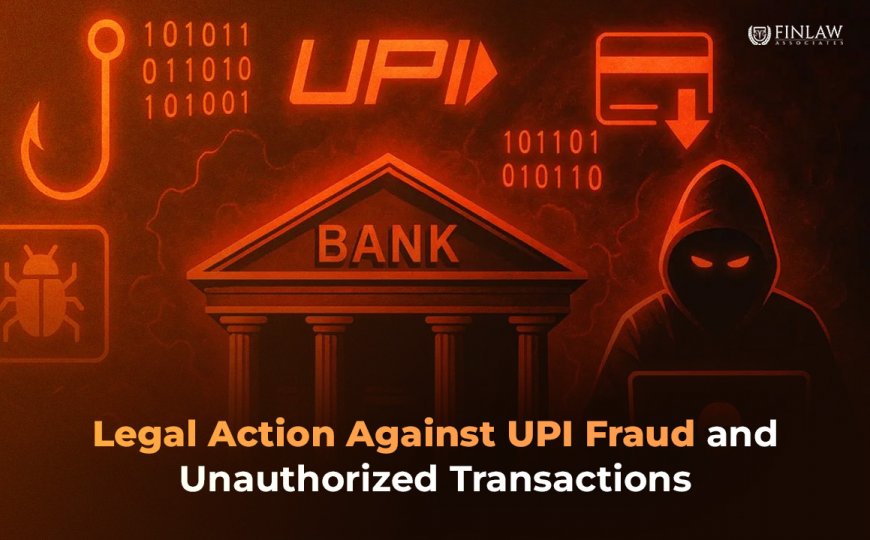
UPI has transformed digital payments in India. Sending money, paying merchants, splitting bills, and managing day-to-day transactions now takes only a few seconds. However, the rapid adoption of digital payments has also created opportunities for fraudsters.
Every day, individuals and businesses lose money through unauthorized UPI transactions, phishing attacks, fake customer support scams, QR code fraud, account takeovers, and social engineering schemes. While many victims initially assume that lost funds cannot be recovered, the reality is more nuanced.
The legal system provides several remedies that may be available depending on the circumstances of the fraud, the evidence available, the speed of reporting, and the parties involved.
If you have become a victim of UPI fraud, understanding your legal rights and the steps that should be taken immediately can significantly improve your position.
The First 24 Hours Matter More Than Most Victims Realize
One of the biggest mistakes people make after discovering a fraudulent transaction is waiting.
Some victims spend hours trying to contact the fraudster.
Others assume the bank will automatically reverse the transaction.
Many delay reporting because they are embarrassed or unsure whether the transaction qualifies as fraud.
Unfortunately, delays can reduce the chances of tracing funds and identifying the recipients.
When unauthorized UPI transactions occur, immediate action should focus on:
-
Preserving evidence
-
Reporting the incident
-
Alerting financial institutions
-
Securing compromised accounts
-
Initiating the legal and complaint process
The sooner these steps are taken, the stronger the victim's position generally becomes.
Understanding the Difference Between UPI Fraud and User Error
Not every disputed UPI transaction is treated the same way.
From a legal and banking perspective, there is a significant difference between:
Unauthorized Transactions
Examples include:
-
Account hacking
-
SIM swap attacks
-
Credential theft
-
Device compromise
-
Unauthorized access to banking applications
Fraudulent Inducement
Examples include:
-
Fake customer support calls
-
Phishing links
-
Investment scams
-
QR code scams
-
Social engineering attacks
Genuine User Mistakes
Examples include:
-
Sending money to the wrong person
-
Entering incorrect UPI IDs
-
Mistaken transfers
The legal remedies available often depend on which category applies.
This distinction becomes important when assessing liability and recovery options.
Common Types of UPI Fraud Seen in India
Digital fraud evolves constantly, but several schemes appear repeatedly.
QR Code Fraud
Victims are tricked into scanning QR codes that authorize payments instead of receiving money.
Fake Customer Care Scams
Fraudsters impersonate banks, payment apps, or service providers.
Remote Access Application Fraud
Victims install applications that allow fraudsters to gain access to devices and financial accounts.
OTP and Verification Code Fraud
Attackers convince victims to share authentication credentials.
Social Media Marketplace Fraud
Fake buyers or sellers manipulate payment processes.
Account Takeover Fraud
Fraudsters gain control of mobile numbers, banking credentials, or payment accounts.
Investment and Trading Scams
Victims are persuaded to transfer money through UPI for fraudulent schemes.
What Legal Rights Does a Victim Have?
Many victims focus exclusively on recovering funds.
While recovery is important, legal rights extend beyond reimbursement.
Depending on the circumstances, a victim may have rights relating to:
-
Fraud investigations
-
Criminal complaints
-
Cybercrime reporting
-
Financial institution complaints
-
Consumer protection remedies
-
Civil recovery proceedings
-
Compensation claims where applicable
The available remedies depend on the facts of each case.
The Legal Process After a UPI Fraud Incident
Rather than viewing fraud recovery as a single action, it is better understood as a process.
Stage 1: Immediate Reporting
The incident should be reported as soon as possible.
Important information includes:
-
Transaction reference numbers
-
UPI IDs involved
-
Screenshots
-
Bank statements
-
Messages
-
Emails
-
Call records
Preserving evidence is essential.
Stage 2: Financial Institution Notification
The bank or payment provider should be notified immediately.
This allows institutions to:
-
Flag suspicious activity
-
Review transactions
-
Investigate account activity
-
Coordinate with other stakeholders where appropriate
Stage 3: Cybercrime Reporting
Online financial fraud often falls within the scope of cybercrime investigations.
Prompt reporting helps establish a record of the incident and supports investigation efforts.
Stage 4: Investigation and Follow-Up
Authorities and financial institutions may review:
-
Transaction trails
-
Device information
-
Account activity
-
Communication records
-
Beneficiary accounts
Stage 5: Legal Remedies
Where necessary, victims may pursue additional legal options depending on the nature and scale of the fraud.
Can Money Lost Through UPI Fraud Be Recovered?
This is usually the first question victims ask.
The honest answer is:
Sometimes.
Recovery depends on several factors, including:
|
Factor |
Why It Matters |
|
Speed of reporting |
Faster reporting may improve tracing opportunities |
|
Type of fraud |
Different fraud types involve different remedies |
|
Availability of evidence |
Strong evidence supports investigations |
|
Recipient account status |
Funds may move rapidly between accounts |
|
Institutional response |
Investigation timelines vary |
|
Complexity of the scheme |
Organized fraud may require extensive investigation |
No responsible lawyer can guarantee recovery.
However, prompt action generally improves the likelihood of a favorable outcome.
Situations Where Legal Intervention Becomes Particularly Important
While some matters can be resolved through reporting mechanisms, others require more comprehensive legal assistance.
Examples include:
High-Value Fraud
Large financial losses often justify a more strategic legal approach.
Corporate Account Fraud
Business accounts frequently involve additional legal and compliance considerations.
Multiple Victim Scams
Large-scale fraud schemes may affect numerous victims simultaneously.
Cross-Border Fraud
International elements can complicate investigations.
Cryptocurrency-Linked Fraud
Where UPI transactions were used to purchase digital assets or facilitate crypto scams.
Identity Theft Cases
When fraud involves misuse of personal information beyond financial loss.
In such situations, experienced cyber fraud lawyers can help victims understand available legal remedies and navigate complex proceedings.
A Practical Example
Consider two victims.
Victim A
-
Reports the fraud within 30 minutes.
-
Preserves screenshots.
-
Saves transaction references.
-
Contacts the bank immediately.
-
Files complaints promptly.
Victim B
-
Waits several days.
-
Deletes messages.
-
Changes devices without preserving records.
-
Cannot identify transaction details.
Which case is likely to be easier to investigate?
The answer is obvious.
Early action frequently strengthens both investigative and legal options.
Mistakes That Can Weaken a Fraud Case
Many victims unintentionally make recovery more difficult.
Common mistakes include:
Deleting Evidence
Messages, screenshots, and transaction records should be preserved.
Negotiating With Fraudsters
Fraudsters often promise refunds in exchange for additional payments.
Sharing More Credentials
Attempting to resolve the issue directly can create additional risks.
Delayed Reporting
Time-sensitive evidence can become harder to trace.
Relying on Social Media Advice
Every fraud case is different and requires fact-specific assessment.
What Evidence Should Be Collected?
Strong evidence is often the foundation of any fraud complaint.
Victims should preserve:
-
Transaction IDs
-
UPI references
-
Screenshots
-
Bank statements
-
Call logs
-
Email records
-
Chat conversations
-
Payment confirmations
-
Device information
-
Fraudulent website links
Organizing this information early can significantly assist future investigations.
How Businesses Should Respond to UPI Fraud
Businesses face unique challenges because fraud may affect:
-
Customer payments
-
Vendor payments
-
Employee transactions
-
Corporate accounts
-
Merchant accounts
Organizations should establish:
-
Fraud response procedures
-
Incident reporting mechanisms
-
Account monitoring systems
-
Employee awareness training
-
Documentation protocols
Preventive measures often reduce long-term losses.
Preventing Future UPI Fraud
The best recovery strategy is prevention.
Practical safeguards include:
Verify Before Paying
Always verify recipients independently.
Never Share Authentication Credentials
Passwords, PINs, OTPs, and authentication codes should remain confidential.
Review Transactions Carefully
Confirm transaction details before approving payments.
Enable Security Features
Use available authentication and security settings.
Monitor Accounts Regularly
Early detection often limits losses.
Be Skeptical of Urgency
Fraudsters frequently create artificial pressure.
Questions People Frequently Ask
Is Every Unauthorized UPI Transaction Considered Fraud?
Not necessarily. The circumstances surrounding the transaction determine how it is classified.
Can Legal Action Be Taken Against UPI Fraudsters?
Yes. Various legal remedies may be available depending on the facts of the case.
Is It Necessary to Preserve Screenshots?
Absolutely. Screenshots and transaction records can be valuable evidence.
What Happens If the Fraudster Uses Multiple Accounts?
Complex fraud schemes often involve layered transactions, making investigation more challenging but not necessarily impossible.
Can Businesses Also Become Victims of UPI Fraud?
Yes. Fraud affects both individuals and organizations.
When Should a Lawyer Be Consulted?
Victims often seek guidance from cyber fraud lawyers when losses are substantial, investigations become complex, identity theft is involved, corporate accounts are affected, or recovery strategies require legal evaluation.
Final Thoughts
UPI has made digital payments faster and more convenient than ever before, but it has also become a target for increasingly sophisticated fraud schemes. When unauthorized transactions occur, the actions taken during the first few hours can significantly influence the outcome.
Victims should focus on preserving evidence, reporting the incident promptly, securing compromised accounts, and understanding the legal remedies that may be available. Waiting, deleting records, or attempting to negotiate with fraudsters often makes recovery more difficult.
Although every case is different, legal intervention can play an important role in complex, high-value, or disputed matters. Understanding your rights and responding strategically is often the first step toward protecting your interests after a UPI fraud incident.
Where significant financial losses or complex fraud scenarios are involved, experienced cyber fraud lawyers can help evaluate available legal options, support investigations, and guide victims through the recovery process.
What's Your Reaction?